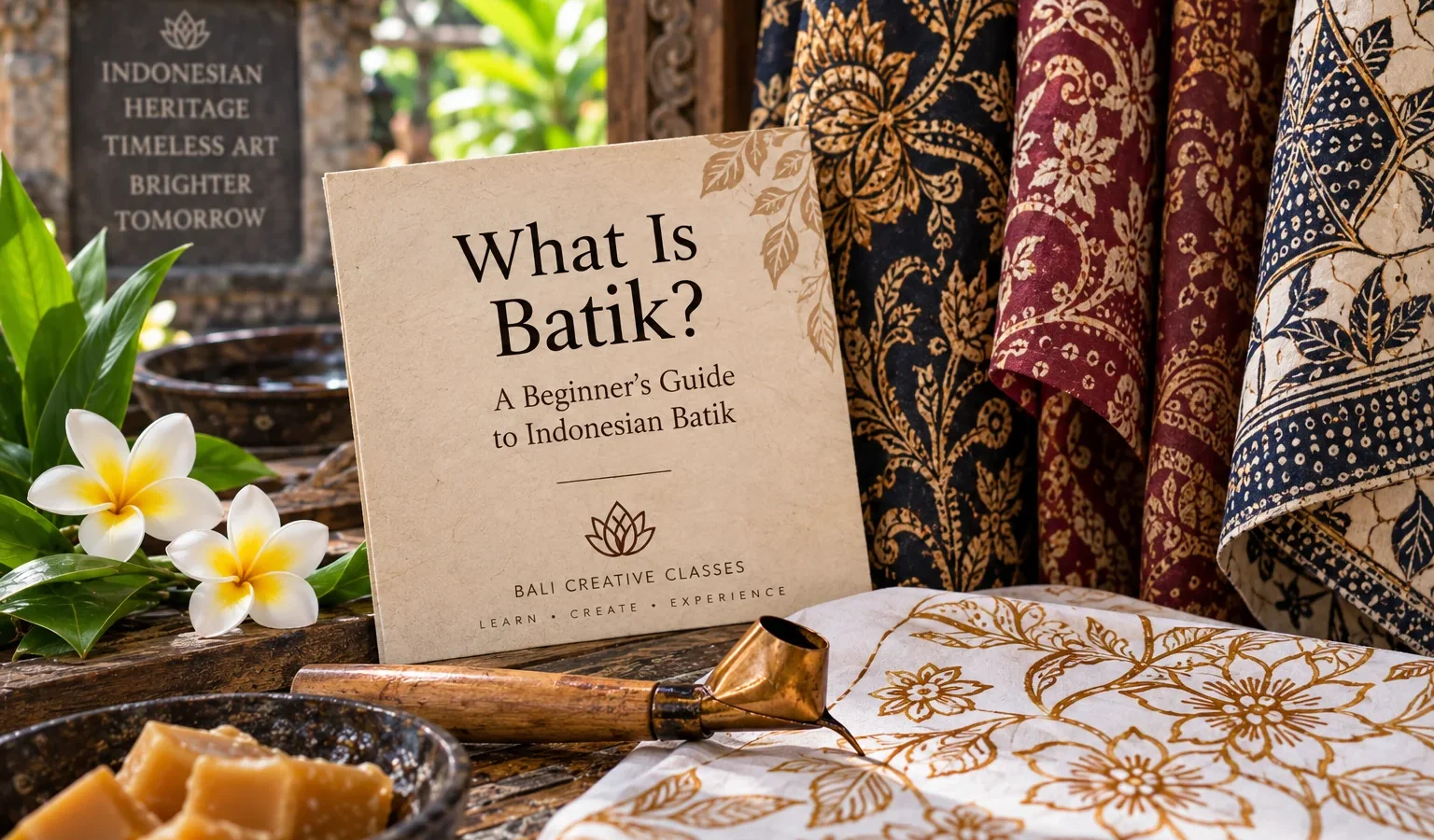
Batik is more than a decorative pattern. In its traditional form, it is a wax-resist textile process in which selected areas of cloth are protected with wax before dyeing. The wax prevents colour from penetrating those areas, allowing makers to build designs through controlled waxing, colouring and wax removal.
Indonesian Batik was inscribed by UNESCO in 2009 on the Representative List of the Intangible Cultural Heritage of Humanity. UNESCO’s recognition concerns not only the technique but also the symbolism, cultural practices and knowledge surrounding batik in Indonesia.
How Does Batik Work?
The basic principle is resist dyeing. A maker applies hot wax to cloth in the places that should resist a dye. The fabric is coloured, and the protected sections remain different from the exposed sections. The wax is later removed. More complex cloth can involve repeated cycles of waxing and dyeing.
This relationship between wax and colour is what distinguishes the process. If you want the stages in more detail, see How Is Batik Made?.
What Does the Word Batik Refer To?
People often use “batik” to describe a visual style, but traditional batik is fundamentally connected to the method used to create the textile. A floral or geometric print that looks batik-inspired is not necessarily made through wax-resist dyeing.
This distinction is useful when shopping, visiting workshops or joining a class. Looking at the manufacturing process tells you more than looking at the pattern alone.
What Is Batik Tulis?
Tulis means “written” in Indonesian. Batik tulis refers to hand-drawn batik in which wax is applied by hand, traditionally with a canting. The maker guides the tool across the cloth to create lines, dots and protected areas.
Because the wax is applied manually, small variations are part of the process. Fine hand-drawn work can be time-consuming, particularly when a textile uses detailed motifs or multiple colour stages.
What Is Batik Cap?
Batik cap uses a stamp, traditionally made from copper, to transfer wax patterns onto cloth. The stamp allows repeating motifs to be applied more quickly and consistently than drawing every line individually with a canting.
Both hand drawing and stamping can belong to wax-resist batik traditions. The important point is that the resist is created with wax before dyeing.
What Is a Canting?
A canting is a small wax-applying tool associated with hand-drawn batik. It typically has a handle, a small reservoir for molten wax and a narrow spout. The tool lets a maker guide wax onto the fabric with much greater precision than simply brushing wax across the surface.
Why Is Indonesian Batik Culturally Important?
UNESCO describes batik as intertwined with Indonesian cultural identity. Different textiles can carry associations with local communities, social settings, nature, history, ceremonies and stages of life. This means batik cannot be understood only as a tourist souvenir or fashion pattern.
At the same time, batik is not frozen in the past. Contemporary makers continue to develop colours, motifs and applications. Cultural continuity does not require every piece to look identical to historic examples.
Is Batik Balinese?
Batik should not be described as exclusively Balinese. It is an Indonesian textile tradition with especially deep historical associations in Java and with practices and adaptations found elsewhere in Indonesia. Bali has workshops where visitors can learn the process, but that location does not turn the wider Indonesian tradition into an exclusively Balinese one.
This distinction matters to us at Bali Creative Classes. Our Batik Class Bali introduces visitors in Bali to Indonesian batik through practical participation while keeping the cultural description accurate.
Is Batik the Same as Ikat?
No. Both can produce striking patterned textiles, but the resist is applied at a different stage. In batik, wax is applied to cloth. In ikat, threads are resist-dyed before weaving. Our Batik vs Ikat guide explains the difference more clearly.
Can Beginners Learn Batik?
Yes, at an introductory level. Mastering fine batik takes skill and practice, but a guided workshop can teach the basic relationship between design, hot wax, dye and finishing. Beginners can experience the method without pretending that a short class makes them expert batik artisans.
If learning by doing appeals to you, read what to expect at a batik workshop in Bali. To join our hands-on experience with private transport and lunch, visit the Batik Class Bali page or proceed to booking when you are ready.