Batik is made by controlling where dye can and cannot enter a piece of cloth. The key is wax: areas covered with wax resist the dye, while uncovered areas absorb colour. By combining design, waxing, dyeing and wax removal, a maker can turn plain fabric into a patterned textile.
The full process can become highly complex, especially for fine hand-drawn batik with several colours. A beginner workshop usually demonstrates a simplified version of the same core principle.
Step 1: Prepare the Fabric
Good batik starts with fabric that can accept wax and dye appropriately. Cotton is widely used. Traditional and professional preparation can include washing and other treatments before the design work begins. The goal is a clean, workable surface.
Step 2: Plan the Design
The maker determines where lines, dots, shapes and protected areas will appear. Some work follows established motifs; other pieces use contemporary or personal designs. The important technical question is which parts of the cloth need to remain protected during each colour stage.
Step 3: Apply Hot Wax
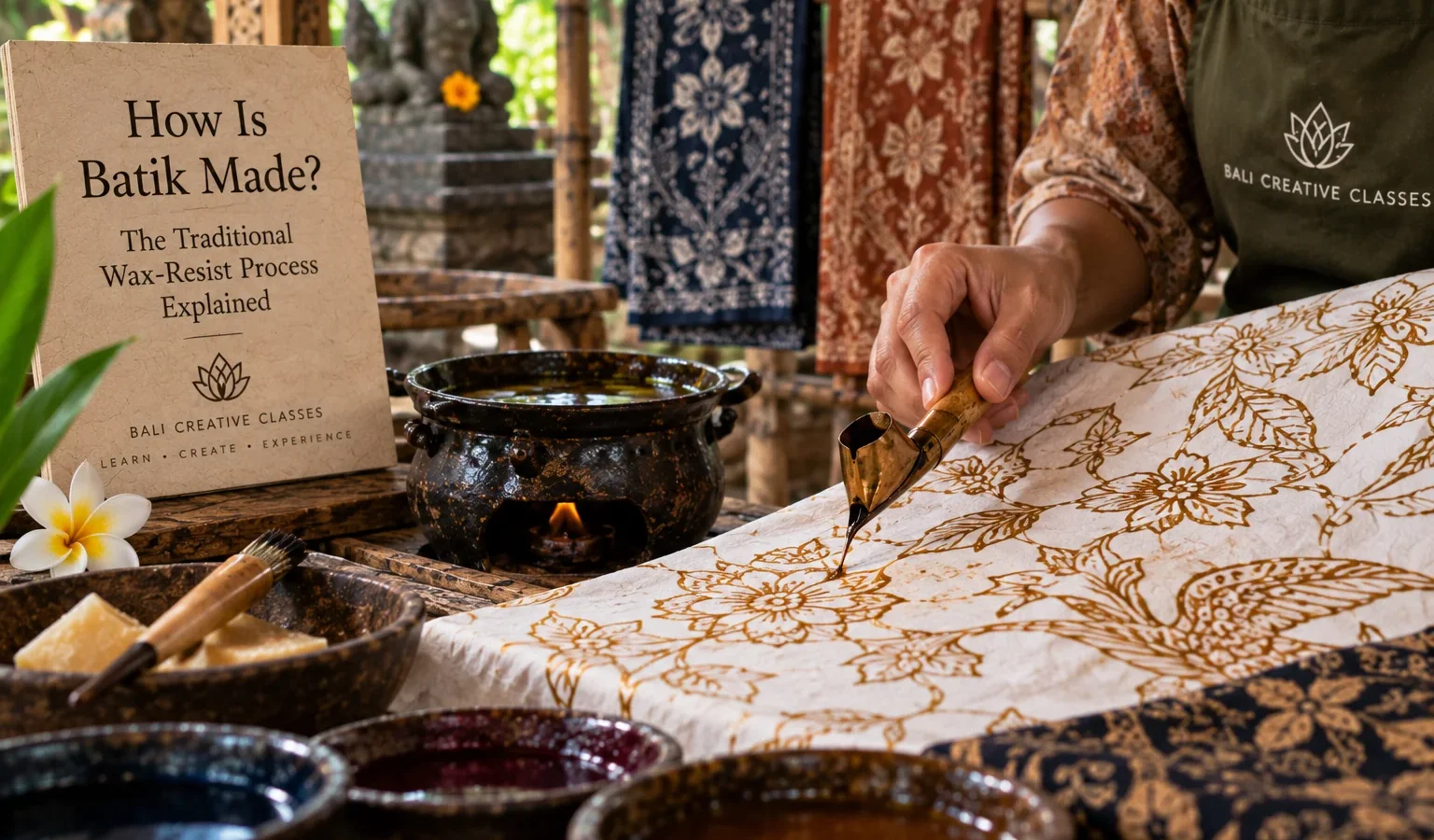
For hand-drawn batik, molten wax can be applied using a canting, a small tool with a reservoir and narrow spout. The wax penetrates the fabric and creates a barrier. Batik cap uses a patterned stamp to apply wax more quickly across repeated areas.
This is the defining resist stage. UNESCO’s description of Indonesian Batik specifically notes the use of hot wax to form dots and lines that resist dyes.
Step 4: Add Colour
Once the required areas are protected, the cloth is dyed. The exposed fibres receive colour while waxed areas resist it. Depending on the method, the fabric may be dipped into a dye bath or coloured through another controlled process.
In the Bali Creative Classes beginner experience, participants work with a one-colour dip-dye stage. This keeps the project manageable while making the resist principle easy to see.
Step 5: Repeat Waxing and Dyeing for More Colours
Complex batik can require several cycles. Areas may be waxed to preserve an existing colour before the cloth enters another dye. Repeating the sequence can build layered designs that would be impossible with a single dip.
This is one reason detailed batik can require significant time. Each colour is not simply painted onto a finished pattern; the maker must think ahead about which sections should resist each stage.
Step 6: Remove the Wax
After dyeing, the wax must be removed to reveal the contrast between protected and coloured areas. Traditional processes commonly use hot or boiling water to release wax from the cloth. Once the wax is gone, the underlying pattern becomes much clearer.
Step 7: Finish the Textile
The cloth is cleaned and finished so it can be handled, worn, displayed or used for another purpose. The exact finishing method depends on the textile, dyes and workshop process.
Why Does Batik Sometimes Show Fine Cracks?
Wax can crack as the cloth moves. Dye may enter some of those tiny openings, creating fine irregular lines. Depending on the intended style, this can become part of the visual character rather than simply a defect.
How Is Hand-Drawn Batik Different From Stamped Batik?
Hand-drawn batik tulis applies wax manually, commonly with a canting. Batik cap uses a stamp to transfer repeating wax motifs. Both use wax as a resist, but they differ in how the wax pattern is placed onto the fabric and in the visual rhythm of the finished work.
Can You Learn the Process in One Class?
You can learn the basic logic in one class, but mastering batik is another matter. A short workshop can introduce wax control, colouring and finishing while giving you a physical understanding of the process. It should be viewed as an introduction to a much deeper craft tradition.
Our first batik workshop guide explains the practical experience. If you want broader cultural context first, read What Is Batik?.
Try the Batik Process in Bali
At Bali Creative Classes, the hands-on workshop in Tohpati lets beginners work on a 30 × 30 cm cotton piece, use wax, add colour, remove the wax and take the finished batik home. The complete Batik Class Bali experience also includes private transport and lunch. To choose a date and provide your pickup details, use the Batik Class booking page.