
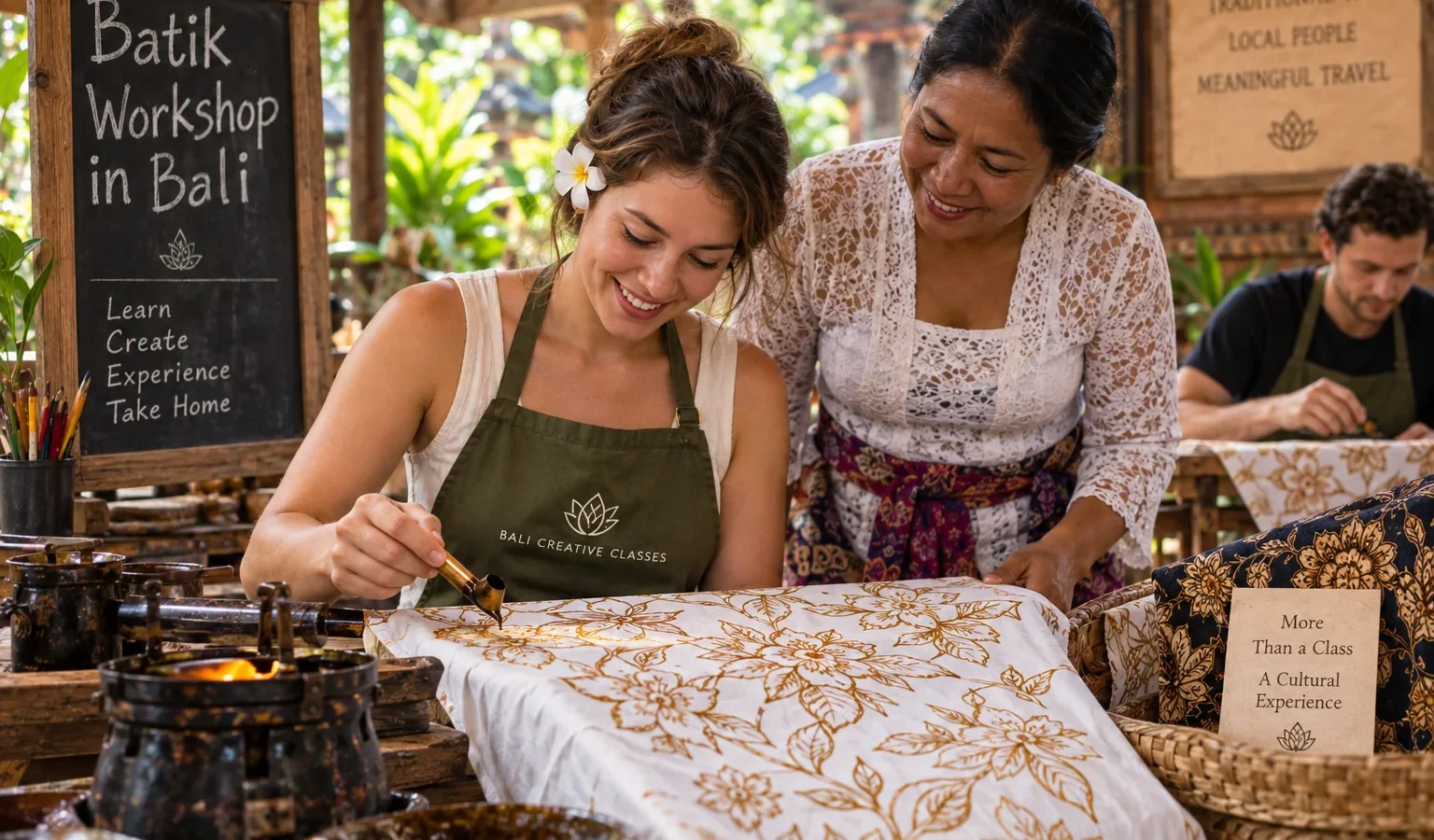
A batik workshop in Bali is a hands-on way to learn how wax, fabric and dye come together to create one of Indonesia’s best-known textile traditions. Instead of only looking at finished batik, you take part in the process yourself and leave with a piece you helped create.
If you have never used a canting or worked with hot wax, that is completely normal. A beginner workshop is designed as an introduction rather than a test of artistic skill. This guide explains what to expect before joining a Batik Class in Bali, from the first demonstration to the finished cloth.
What Happens During a Batik Workshop?
The exact sequence varies by workshop, but traditional batik making is based on wax-resist dyeing. Wax is placed on selected areas of cloth so those areas resist the dye. UNESCO describes Indonesian Batik as a tradition in which artisans use hot wax to form dots and lines, dye the cloth, remove the wax and repeat the process when additional colours are required.
For a first class, the process is simplified so you can understand the essential technique within a manageable session. You are usually introduced to the fabric, design and tools before trying the wax application yourself.
Learning to Use a Canting
One of the most memorable parts of a hands-on workshop is using a canting. This small tool holds melted wax and releases it through a narrow spout. The aim is to guide the wax along the design so it creates a barrier against the dye.
Your first lines may not be perfectly even, and they do not need to be. Controlling wax flow is a skill developed through practice. A beginner class is valuable because you can feel how the tool works instead of only reading about the technique.
What Will You Make?
In the Bali Creative Classes experience, participants work with a 30 × 30 cm cotton fabric. You take part in wax application, colouring, wax removal and finishing, then take the completed batik home. The relatively compact format makes the project achievable for first-time participants while still demonstrating the core process.
How Long Should You Allow?
The hands-on batik session in our experience is scheduled for about 90 minutes. The complete experience is approximately six hours because it also includes private hotel or villa transfers and lunch. That distinction is useful when comparing workshops: “class duration” and “total experience duration” may not mean the same thing.
Do You Need Drawing Experience?
No. Batik is a craft that rewards patience and attention, but a beginner introduction does not require previous drawing, painting or textile experience. The purpose is to understand the method and participate in it with guidance.
If you are travelling with children, ask about suitability before booking. Hot wax and workshop tools require appropriate supervision, particularly for younger participants. Read our guide to batik classes for beginners and families for more practical considerations.
What Should You Wear?
Choose comfortable clothing that allows you to work easily around wax and dye. Because craft processes can occasionally involve splashes or marks, valuable or difficult-to-clean clothing is not the most practical choice. Closed or secure footwear can also make moving around a working area more comfortable.
What Is Included in Our Batik Experience?
The Bali Creative Classes package combines the workshop with private air-conditioned transport, fuel and parking, batik materials, a 30 × 30 cm cotton fabric, mineral water or tea, lunch and a certificate of completion. The workshop takes place in Tohpati, an area of Bali associated with craft workshops.
The package includes private air-conditioned transport, with hotel or villa pickup at 08:30. Provide your accommodation details when booking so the pickup arrangements can be confirmed.
Why Try Batik Instead of Only Buying It?
Buying a finished textile and learning how batik is made are different experiences. A workshop gives you direct contact with the resist-dye principle, the canting and the sequence behind the finished pattern. It also helps explain why handmade batik can involve considerably more work than its final appearance suggests.
For background before your class, read What Is Batik? and our explanation of how batik is made.
Planning Your First Batik Workshop in Bali
Before booking, check what the listed price actually includes, whether transport is provided, how much hands-on time you receive, what size project you make, and whether you can take the finished work home. These details matter more than simply comparing the word “batik class” across different experiences.
If you want the complete Bali Creative Classes experience with transport and lunch included, see the Batik Class Bali experience. When you are ready to choose your date and provide your group size and pickup details, continue to the Batik Class booking page.