
Bali offers more than beaches, temples and scenic viewpoints. For travellers who enjoy making, designing and learning with their hands, the island can also be explored through workshops and craft traditions.
The most rewarding creative activities are not simply photo stops. They give you enough context to understand what you are doing, introduce the materials and techniques, and respect the people whose skills make the experience possible.
1. Join a Hands-On Batik Workshop
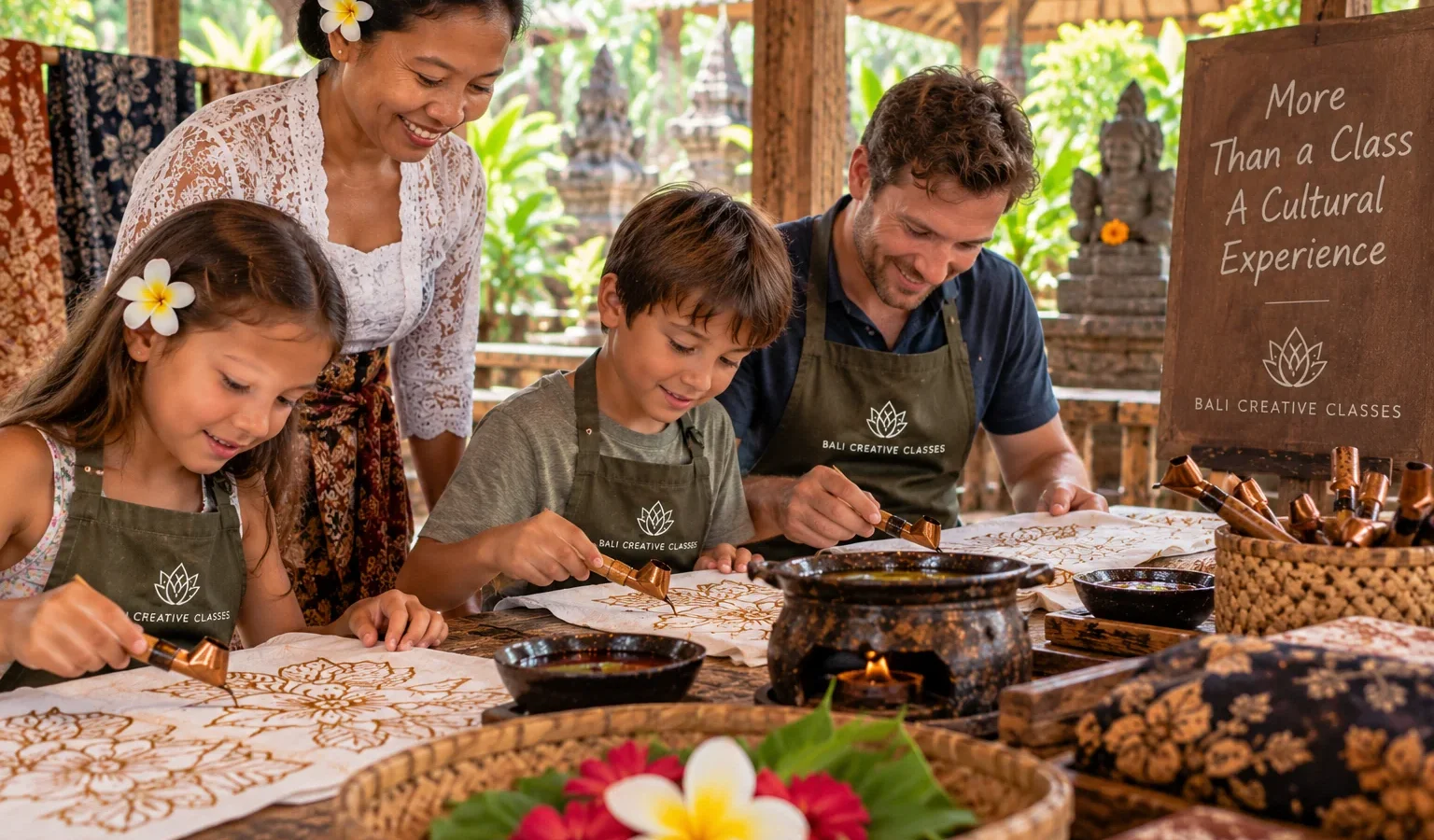
A batik class introduces the basic logic of Indonesian wax-resist textile making. You can learn how wax protects selected parts of cloth from dye and try a canting as part of the process.
Batik is an Indonesian tradition rather than something that should be described as exclusively Balinese. Joining a workshop in Bali is an opportunity to engage with that wider Indonesian textile heritage while travelling on the island. Start with What Is Batik? if you want the cultural background.
Our Batik Class Bali in Tohpati combines a beginner workshop with private transport and lunch.
2. Try a Silver-Making Class
Silver workshops can turn jewellery shopping into a making experience. Depending on the class, participants may learn basic shaping, texturing or finishing techniques and create a small piece to take home.
When comparing classes, check what quantity of silver is included, which designs are realistic within the session, and whether additional material costs apply. Clear inclusions make it easier to compare experiences fairly.
3. Learn About Wood Carving
Wood carving has a visible place in Bali’s built environment, decorative arts and workshop culture. A visitor workshop can provide an introduction to tools and surface carving, while more complex traditional carving requires far more experience than a short class can provide.
Choose experiences that distinguish between an introductory tourist workshop and the expertise of established craftspeople.
4. Explore Painting and Drawing Workshops
Ubud and surrounding areas have long been associated with visual arts. Workshops can range from informal painting sessions to introductions connected with local styles. If cultural interpretation matters to you, look for classes that explain context rather than only supplying paint and a canvas.
5. Discover Textile Traditions Beyond Batik
Indonesia has many textile traditions. Batik and ikat, for example, are often grouped together visually but use different production methods. In batik, wax resists dye on cloth; in ikat, yarn is resist-dyed before weaving. Read Batik vs Ikat before visiting textile shops or collections.
6. Combine Food and Craft Experiences
Creative travel does not have to be limited to objects. Cooking is also a practical way to engage with ingredients, techniques and everyday culture. A cooking class and a craft workshop can complement each other because both replace passive observation with participation.
If your itinerary has several days, avoid packing every activity into one rushed day. Giving each experience enough time usually creates a stronger memory than collecting as many stops as possible.
How to Choose a Good Craft Workshop in Bali
Look beyond the headline price. Check what materials are included, how long the hands-on portion lasts, whether transport is included, what you actually make, whether the finished work is yours to keep, and whether the description is culturally accurate.
For batik specifically, ask whether the activity includes genuine wax-resist steps rather than using “batik” only as a decorative label. Our guide to what to expect at a batik workshop gives you a practical checklist.
Respect the Difference Between Trying and Mastering
A two-hour or half-day class can be meaningful without pretending it makes a visitor an expert. Traditional crafts often involve knowledge developed over years. A good workshop gives you an entry point: enough direct experience to appreciate the technique more deeply.
Add Batik Making to Your Bali Itinerary
If textile craft is high on your list, the Bali Creative Classes experience includes a hands-on batik session in Tohpati, a 30 × 30 cm cotton project to take home, materials, private transport, lunch and a certificate. See the full Batik Class Bali itinerary, or go directly to the booking page when you know your date and pickup location.