
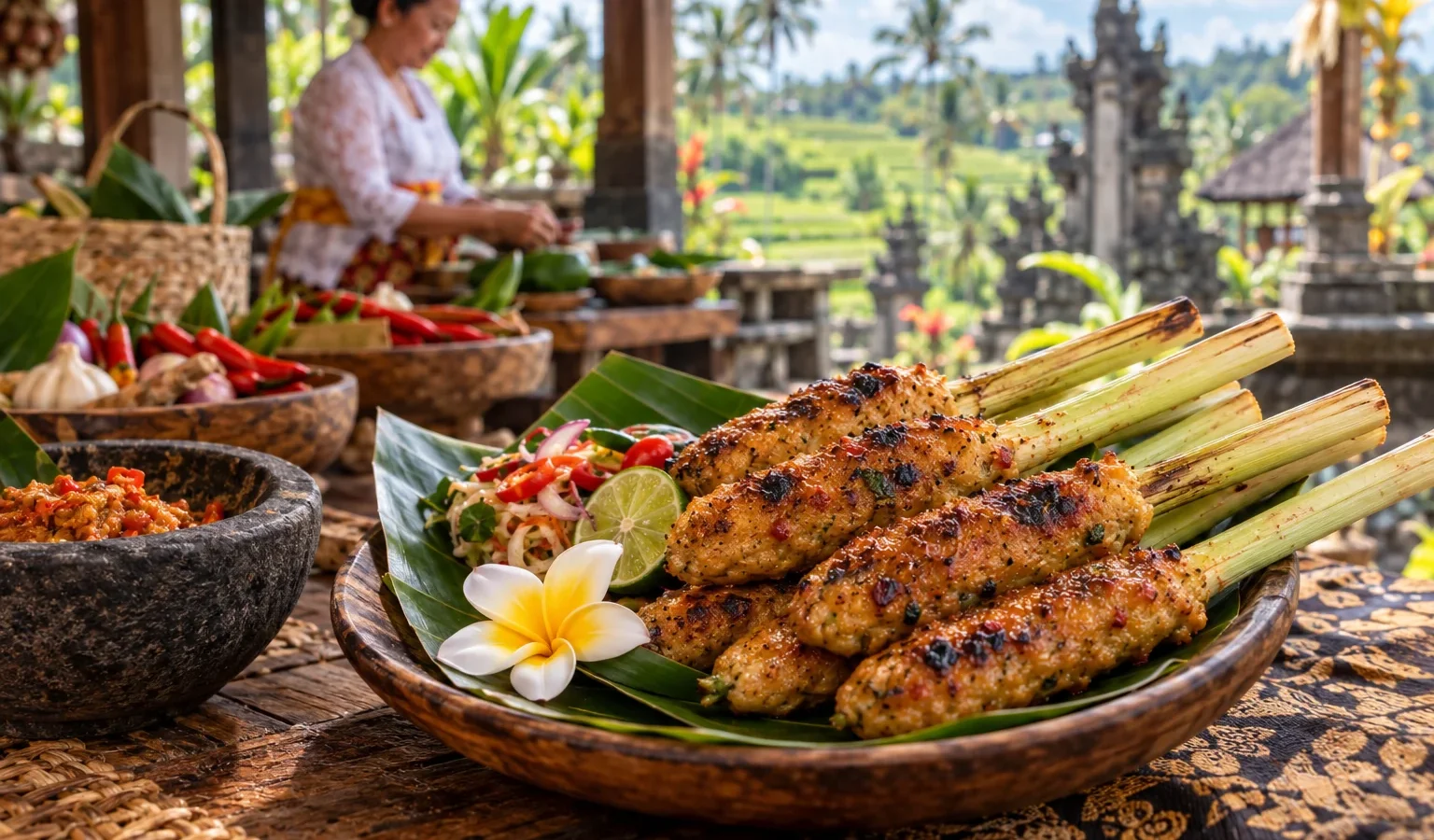
Sate lilit is one of Bali’s best-known traditional dishes. Unlike many other types of satay, which usually consist of pieces of meat threaded onto a skewer, sate lilit is made by seasoning finely minced meat and pressing or wrapping the mixture around a skewer before grilling it.
The result is a satay with a softer texture, fragrant spices and a distinctive shape. For travelers who want to understand Balinese food beyond restaurant menus, sate lilit is also a useful introduction to the way local ingredients, spice pastes and hands-on cooking techniques come together in a single dish.
What Is Sate Lilit?
Sate lilit is a traditional Balinese satay made from minced meat mixed with seasonings and aromatics. Instead of being cut into cubes and pierced onto a skewer, the seasoned mixture is shaped around the skewer by hand. The word lilit refers to the way the mixture is wrapped or wound around it.
Depending on the recipe and setting, sate lilit may be prepared with fish, chicken or other meats. The exact seasoning also varies from one kitchen to another, but the dish commonly reflects the layered use of spices and aromatics that characterizes Balinese cooking.
What Is Sate Lilit Made From?
The basic structure is simple: minced meat, seasoning, aromatics and a skewer. What gives sate lilit its character is the balance of ingredients used to season the mixture.
Balinese kitchens often rely on combinations of fresh aromatics and spices rather than a single dominant seasoning. Ingredients such as shallot, garlic, turmeric, galangal, lemongrass and chili may appear in Balinese spice mixtures, although the exact combination depends on the recipe being used.
If you want a broader introduction to these ingredients, see our guide to Balinese spices and aromatics and our overview of Bumbu Bali.
How Is Sate Lilit Traditionally Prepared?
The meat is first minced or finely chopped, then combined thoroughly with the seasoning. The mixture needs to hold together well enough to be shaped around the skewer without falling apart while it cooks.
Instead of simply pushing pieces of meat onto a stick, the cook uses their hands to press and shape the mixture evenly around the skewer. This is one reason sate lilit is especially interesting in a hands-on cooking setting: the shaping technique is part of the dish itself.
Once formed, the satay is grilled until cooked through and lightly browned on the outside. The grilling adds aroma and texture while keeping the seasoned mixture at the center of the experience.
This combination of preparation, hand-shaping and heat is a good example of the practical skills explored in traditional Balinese cooking techniques.
Why Is Sate Lilit Wrapped Around a Skewer?
The shape is one of the clearest differences between sate lilit and more familiar forms of satay. With ordinary skewered satay, individual pieces of meat remain separate. With sate lilit, the minced mixture forms a continuous layer around the skewer.
This gives the cook more control over how seasoning is distributed through each portion. Because the spices are mixed directly into the minced meat, the flavor is incorporated throughout rather than applied only to the surface.
The shaping method also produces a different texture. Instead of biting through separate chunks, you get a more compact, tender mixture with grilled edges.
How Is Sate Lilit Different From Regular Satay?
The main difference is preparation. Many Indonesian satays use cubes or slices of meat that are marinated, skewered and grilled. Sate lilit begins with minced meat that has already been blended with its seasonings before being shaped around the skewer.
That means the differences are not only visual. Sate lilit tends to have a more integrated texture and seasoning profile because the aromatics and spices are mixed throughout the meat.
It is therefore better to think of sate lilit as a distinct Balinese preparation rather than simply another flavor of standard satay.
What Does Sate Lilit Taste Like?
The exact flavor depends on the ingredients and recipe, but sate lilit is typically savory, aromatic and gently smoky from grilling. Fresh spices and aromatics give it more complexity than a simple grilled-meat skewer.
The texture is also important. Because the meat is minced and mixed with seasonings before grilling, the inside can stay tender while the outer surface develops a lightly charred finish.
Different households and cooks may make it differently, so there is no reason to expect every sate lilit in Bali to taste exactly the same.
Where Does Sate Lilit Fit Into Balinese Cooking?
Sate lilit is useful for understanding several larger ideas in Balinese cooking at once: the importance of fresh aromatics, the use of spice mixtures, hands-on preparation and the relationship between texture and cooking method.
It also helps explain why simply reading a list of ingredients does not tell the whole story. The way ingredients are crushed, mixed, shaped and cooked matters just as much as the ingredients themselves.
That is why dishes like sate lilit fit naturally alongside broader topics such as Balinese spice pastes, mortar-and-pestle preparation and traditional grilling techniques.
Can You Learn About Sate Lilit in a Balinese Cooking Class?
A cooking class can provide useful context for dishes like sate lilit because you can see how ingredients and techniques connect in practice. Rather than only tasting the finished dish, you can learn how seasoning is prepared, how the mixture is handled and how the cooking method affects the final result.
If you are curious about the broader range of dishes that may appear in a class, see what you actually cook in a Balinese cooking class.
For travelers staying around Ubud who want a hands-on introduction to local ingredients, techniques and Balinese food, you can also explore our Balinese cooking class near Ubud.
Frequently Asked Questions About Sate Lilit
Is sate lilit the same as regular satay?
No. Regular satay commonly uses pieces of meat placed on a skewer, while sate lilit uses a seasoned minced mixture shaped around the skewer.
Is sate lilit always made with fish?
No. Fish is one common version, but sate lilit can also be prepared with other meats depending on the recipe and kitchen.
Why does sate lilit taste different from other satay?
The spices and aromatics are mixed directly through the minced meat, so the seasoning is distributed throughout the satay rather than sitting mainly on the outside.
Is sate lilit a Balinese dish?
Yes. Sate lilit is strongly associated with Balinese cuisine and is one of the dishes many visitors encounter when exploring traditional food in Bali.
Final Thoughts
Sate lilit is more than a different shape of satay. Its minced texture, integrated seasoning and hand-shaped preparation make it a useful example of how Balinese cooking combines ingredients and technique.
Understanding dishes like sate lilit also makes it easier to recognize the role of spice pastes, fresh aromatics and traditional cooking methods across Balinese food as a whole.